Two Leaders Down: Mongolia’s Ruling Party in Crisis
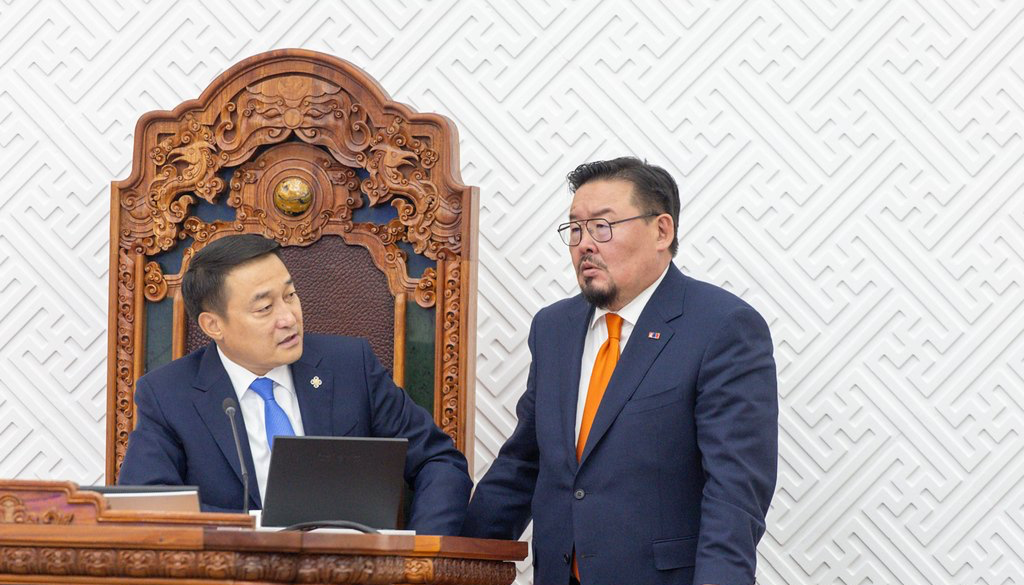
A rare political storm, not only for Mongolia but even by global standards, erupted throughout the week as the State Great Khural (Parliament of Mongolia) voted in a single day to dismiss both the Prime Minister and the Speaker. The event marks the peak of internal divisions within the ruling party, a split that began last month and has now reached its breaking point.
Prime Minister's Boycott
Parliament members first voted to remove Prime Minister G.Zandanshatar from office. The motion, initiated by MP P.Sainzorig and signed by 54 MPs, triggered a constitutional requirement for Parliament to discuss the matter within ten days. Political tensions began to boil exactly 24 hours before the deadline, starting Thursday morning.
The Standing Committee on State Structure had earlier voted 3–19 against the Prime Minister’s dismissal, a result that took many by surprise. This meant that the full Parliament would vote on whether to support the committee’s recommendation “not to dismiss” him.
However, the Thursday session scheduled to start at 10:00 a.m. was delayed for nearly 24 hours due to insufficient attendance. Deputy Speaker H.Bulgantuya spent the entire night urging, demanding, and even pleading with MPs to attend, but the required quorum of 64 members remained three short until dawn. Pro-government MPs boycotted the session, locking themselves in their offices in protest.
At that point, attendance stood at 31 members from the Mongolian People’s Party (MPP), 20 from the Democratic Party (DP), 5 from the HUN Party, 4 from the National Coalition, and 1 from the Civil Will–Green Party. Some MPs even came directly from the airport after returning from an official visit to India with the President, showing how tense the situation had become.
Then, in a surprise move, the Democratic Party reversed the stalemate by announcing it would only attend if both the Prime Minister’s and Speaker’s positions were discussed together. Early Friday morning, DP members arrived en masse, and by 1:30 p.m.—the constitutional deadline, 111 MPs were in attendance.
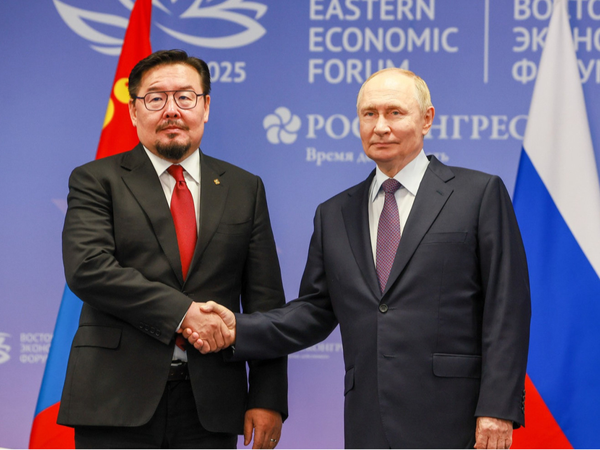
The final vote saw 71 MPs (63.9%) support dismissal, officially removing G.Zandanshatar, Mongolia’s 34th Prime Minister, from office. Having served only 126 days, he now holds the record as the shortest-serving Prime Minister in Mongolia’s history.
The Speaker’s Unexpected Resignation
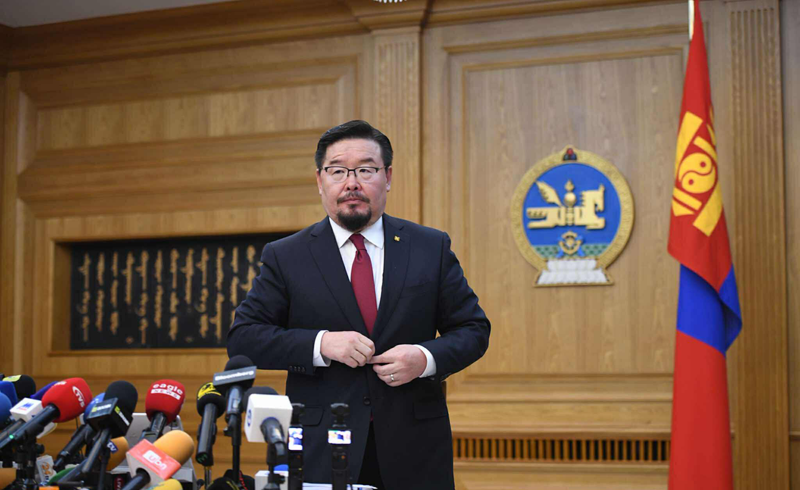
Even before Thursday’s dramatic boycott, Parliament Speaker D.Amarbayasgalan shocked the public by voluntarily submitting his resignation. He explained that the move was intended to clear his name in connection with the ongoing “coal case,” a corruption scandal involving the coal sector. What drew particular attention, however, was his call for the Prime Minister to resign with him.
This placed the Democratic Party in a difficult position, it could no longer justify continuing its boycott. Internal divisions had already begun to appear among DP members who had been negotiating with the ruling MPP faction.
D.Amarbayasgalan had recently secured victory at the MPP’s party congress, effectively meeting the conditions to become party leader. However, this result has not been accepted by the opposing faction, and the Supreme Court has yet to confirm his leadership. He is expected to finalize the matter at the party’s next general congress, scheduled for November 15.
Following the Prime Minister’s dismissal, Parliament also voted on the Speaker’s resignation. Out of 114 MPs present, 102 (89.7%) supported the motion, officially ending D.Amarbayasgalan’s term as Mongolia’s 13th Speaker. Deputy Speaker H.Bulgantuya was appointed acting Speaker. The last time a Speaker stepped down before the end of their term was in 2019, when M.Enkhbold resigned.
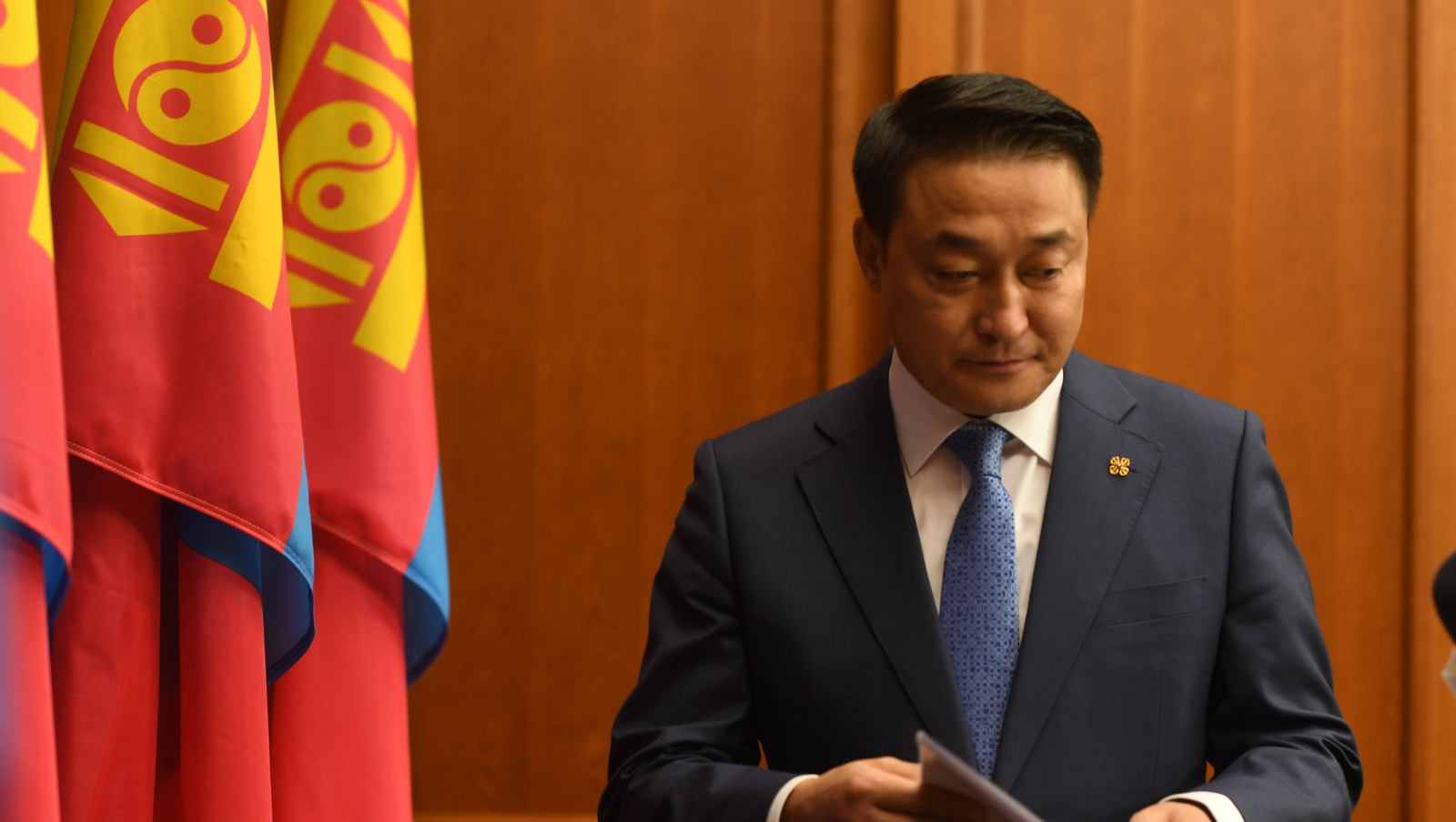
Presidential Veto and Constitutional Court Review
On Monday morning, President Khurelsukh announced that he was issuing a full veto of Parliament’s decision to remove the Prime Minister. While the veto was widely expected, the speed of the announcement surprised the public. Parliament is now scheduled to discuss whether to override the veto on Thursday. If one-third of MPs (42 votes) support the President, the veto will stand.
Meanwhile, the Constitutional Court (Tsets) convened its full bench on Wednesday to examine whether Parliament’s voting procedures had violated the Constitution—specifically, the delayed attendance counting and the wording used in the motion. Although no final decision has yet been reached, 18 MPs representing Parliament walked out in protest, claiming the Court was biased.
For the opposition Democratic Party, these events amount to a string of political victories. By maintaining party unity and capitalizing on the ruling party’s divisions, the DP has reasserted its influence in Mongolia’s new 126-member Parliament. The coming weeks—and the next political moves—will largely depend on them.
The Secretariat of the State Great Khural (Parliament) has emphasized that the recent vote of dismissal and related proceedings were conducted in full compliance with the law. Similar processes led to the resignations of J.Erdenebat in 2017 and U.Khurelsukh in 2021, officials noted.
The ruling Mongolian People’s Party (MPP) is now openly divided, with two faction leaders—J.Bat-Erdene and J.Batjargal—each claiming authority over the party’s parliamentary group. The next parliamentary speaker will be nominated by this group once its leadership dispute is resolved, followed by the party’s Executive Council and National Conference selecting a candidate for Prime Minister. The MPP has 30 days to do so, and the clock is already ticking.
Despite the procedural clarity, Mongolia’s political turbulence shows no sign of easing. With both top leadership posts vacant, the absence of an active government is raising real concerns that budget deadlines may be missed and policy decisions delayed.